-
About Us
-
-
-
Contact Us

Understanding Self-Propelled Ore Transportation in One Article - Black King Kong Report
Preface
Since the 1930s, the technology of self-propelled equipment for transporting ore has emerged, opening a new chapter in the field of mining transportation. The advent of this innovative technology, like a stone thrown into a calm lake, has sent ripples through the mining industry, marking a key step in the transition of ore transportation from traditional manual and simple mechanical methods to mechanized and automated ones. At that time, the mining industry was facing many challenges such as efficiency improvement and cost reduction, and the emergence of self-propelled equipment brought hope for solving these problems.
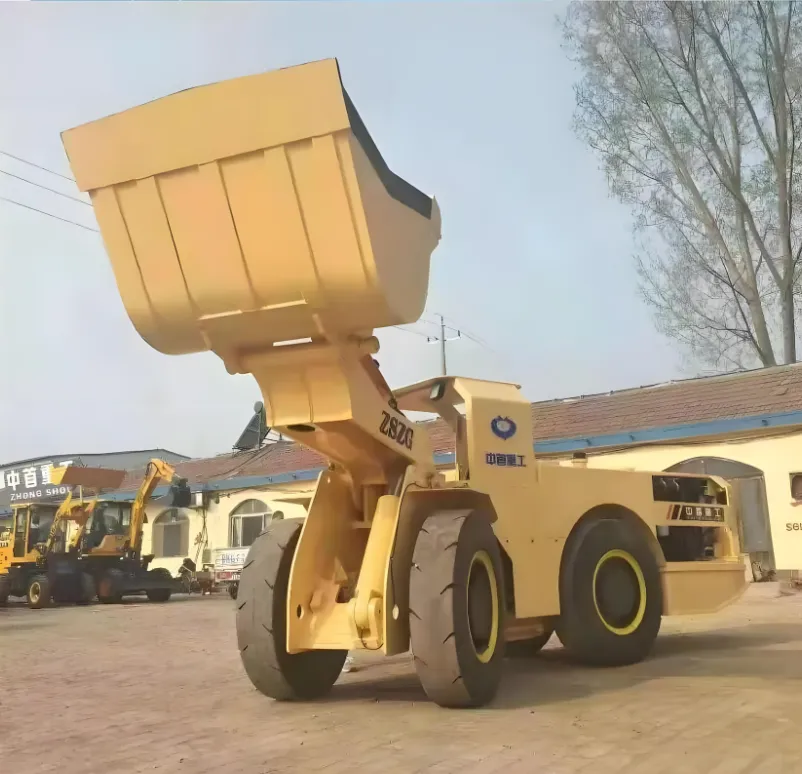
By the 1960s, self-propelled equipment ushered in a period of rapid development, gradually branching into two types: tracked and trackless. Tracked self-propelled equipment, with its stability in running along predetermined tracks, found its place in some small mines. It's like a "small train" running on a fixed track, transporting ore from the mining point to the designated location in an orderly manner according to the set route. However, its reliance on tracks also limits its flexibility and the cost of track laying. Trackless self-propelled equipment, on the other hand, is like a horse freed from its shackles, exhibiting high flexibility in the mine. It does not require the laying of complex tracks and can freely shuttle between various work points according to the actual terrain and mining needs, greatly improving transportation efficiency and convenience. It is precisely because of these significant advantages that trackless self-propelled equipment has gradually stood out in many mines and become the mainstream choice for ore transportation.
Equipment Types
In the field of self-propelled ore transportation, various types of equipment perform their respective functions, contributing to efficient ore transportation.
Loading machines, such as the ZYQ-14 and ZYQ-12 models, are members of the ore transportation team. Taking the ZYQ-14 as an example, its bucket capacity is 0.3m³, and its bin capacity is 1.8m³, with a minimum working cross-section of 2.8×3.0m³. It has the ability to load itself and transport ore to the chute for unloading, often used for ore transportation in sublevel stoping mining methods without bottom pillars and for slag removal in mining preparation projects. It is like a diligent "small transporter", completing the loading of ore in an orderly manner within the specified space. However, it also has its own "shortcomings": the wind rope limits the transport distance, the wind rope transport distance is less than 50m, and the wind rope is subject to high wear and tear, easily leading to breakage. Its work efficiency is 120-150t/shift, and its annual efficiency is 80000t, which is relatively low. In large mines, it is gradually unable to meet the growing transportation needs and tends to be replaced by loaders.
Loaders are divided into diesel-powered and electric-powered types. Its operation method is to shovel ore into the bucket, transport it to the chute, and then dump the ore by tilting the bucket. Compared with loading machines, loaders have many significant advantages: they do not use wind ropes, their transport distance is unlimited, they have a large climbing ability, a large bucket capacity (0.75-10.7m³), a fast walking speed, and high efficiency, making them very suitable for large mines. Abroad, in countries such as Canada, the United States, and Germany, loaders are widely used; in China, some large and medium-sized mines such as Meishan Iron Mine and Beiminghe Iron Mine have also widely adopted them. However, diesel-powered loaders also face some problems, with exhaust purification being one of them. Due to the large amount of exhaust gas produced by diesel combustion, although the machine is equipped with an exhaust purification device, the minimum air volume is 2.1m³/min per brake horsepower, the actual amount far exceeds this standard, which also promotes its development towards electric loaders. In addition, loaders also have problems such as large maintenance requirements, serious tire wear, and large roadway specifications.
Electric shovels and dump trucks are also important equipment for ore transportation. Electric shovels, as the main force for excavating and loading ore, have powerful excavation capabilities and can easily separate large pieces of ore from the ore bed and accurately load them into the dump truck's cargo box. Dump trucks, with their large carrying capacity and flexible transportation capabilities, quickly transport the ore loaded by the electric shovel to the designated location. In some large open-pit mines, the cooperation between electric shovels and dump trucks is seamless. They are like a highly efficient "transportation team", continuously transporting large amounts of ore from the mining site to the processing site or storage area, providing strong support for the efficient production of the mine.
Rock loaders are mainly used for loading ore or rocks in horizontal or gently inclined tunnels. They have the characteristics of stable loading, large control range, no spillage, high efficiency, and continuity. They can continuously excavate and remove rock debris and transport them to shuttle cars and other transfer equipment. They are suitable for mines, railway tunnels, and water conservancy culverts. It is like a "loading expert" in the tunnel, playing an important role in loading in specific operating environments.
Self-propelled mine cars have a power device and use a tire-type walking mechanism. They have a simple structure, are flexible and maneuverable, and are easy to dispatch. They are especially suitable for soft rock, small tonnage, and short distances. According to the power form, they can be divided into pneumatic, electric, and internal combustion drive types; according to the unloading method, they can be divided into rear-dumping, gate bottom-unloading, and bottom scraper self-unloading types. In some small mines or specific operating scenarios, self-propelled mine cars can quickly complete ore transportation tasks due to their flexibility, becoming an indispensable transportation tool.
Loading Machine
(1) Equipment Details
In the family of ore transportation equipment, loading machines are a common type of equipment, among which the ZYQ-14 and ZYQ-12 loading machines are representative. Taking the ZYQ-14 loading machine as an example, its bucket capacity is 0.3m³, which means it can scoop up 0.3 cubic meters of ore at a time, like a small "storage box" for ore, collecting scattered ore. Its bin capacity reaches 1.8m³, allowing it to store more scooped ore, reducing the number of trips and improving transportation efficiency. Its minimum working cross-section is 2.8×3.0m³, which determines the space environment in which it can operate. Only when such space conditions are met can the ZYQ-14 loading machine operate normally.
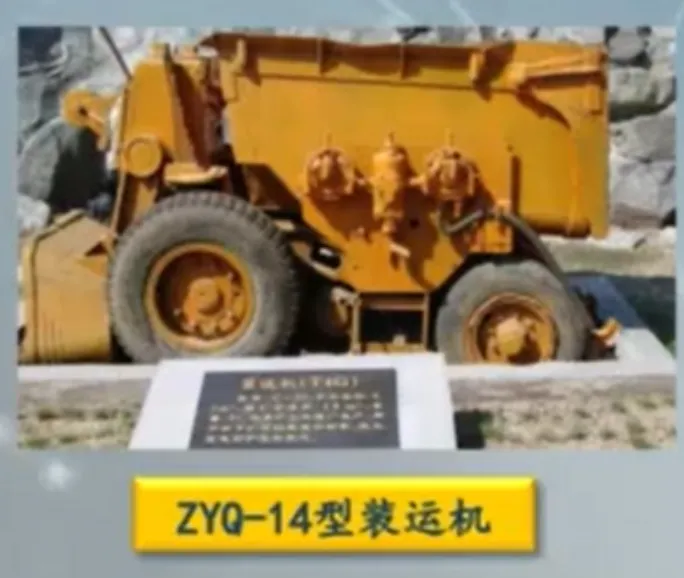
In actual operation, the ZYQ-14 loader acts like a well-trained "worker," carrying out ore loading work in an orderly manner. It can load ore into boxes by itself, then, along a predetermined route, transport the ore-filled boxes to the chute, accurately completing the unloading operation. This workflow allows it to play an important role in ore transportation in sublevel stoping mining methods and slag removal in mining preparation engineering. In some mines that use sublevel stoping mining methods, the ZYQ-14 loader is busy shuttling between various work points, promptly removing the collapsed ore, freeing up space for subsequent mining operations, and ensuring the smooth progress of mining work.
(II) Operating Influencing Factors
The operating efficiency of the loader is not static but is affected by a combination of factors.
Ore size is one important factor. If the ore size is too large, it's like trying to fit huge stones into a small container; the loader's bucket may not be able to scoop up the ore smoothly, or it may be difficult to transport it stably after scooping, resulting in a significant decrease in work efficiency. Conversely, smaller ore sizes are easier for the loader to handle, improving its work efficiency.
The transport distance also has a significant impact on the loader. Taking the ZYQ-14 loader as an example, since it uses compressed air drive, the air rope is a key factor limiting its transport distance. The air rope transport distance is less than 50m; within this distance, it can work relatively efficiently. Once this distance is exceeded, the wear and tear on the air rope will increase dramatically, and the worn areas are prone to bursting, which will not only affect the normal operation of the loader but may also lead to accidents. Moreover, as the transport distance increases, the round-trip time of the loader increases, the number of transports per unit time decreases, thus reducing the overall work efficiency.
The tunnel curve radius and road surface smoothness are also closely related to the loader's operating efficiency. When the tunnel curve radius is too small, the loader will be restricted when turning, may not be able to pass smoothly, and will need to spend more time and effort adjusting the driving direction. If the road surface is uneven, the loader will experience bumps during driving, which will not only affect the stability of the equipment but may also cause ore to spill from the bucket or box, increasing the extra workload and reducing work efficiency. In mines with smaller tunnel curve radii and rough roads, the loader's driving speed is significantly reduced, and work efficiency is greatly compromised.
In addition to the above objective factors, subjective factors such as work organization, equipment condition, and driver operating skills also have a great impact on loader efficiency. Reasonable work organization can optimize the loader's operation process, making it closely connected between various links, reducing waiting time, and improving work efficiency. For example, scientifically arranging the loader's driving route, loading and unloading points, and working hours can allow it to fully utilize its performance. The condition of the equipment is directly related to whether the loader can operate normally. If the equipment has faults, such as transmission system failure or brake system failure, frequent shutdowns for repairs will occur, leading to work interruptions and reduced efficiency. As the operator of the loader, the driver's skill level determines whether the equipment's performance can be fully utilized. Experienced and skilled drivers can accurately control the loader's movements and quickly complete loading, unloading, and transportation tasks; while novice drivers may, due to unskilled operation, cause problems such as prolonged loading and unloading times and unreasonable driving routes, thus affecting work efficiency.
Considering various factors, the work efficiency of the ZYQ-14 loader is 120-150t/shift, and the annual efficiency is 80000t. However, with the continuous expansion of mining scale and the increasing demand for production efficiency, this work efficiency is gradually unable to meet the needs of large mines. In large mines, the amount of ore that needs to be transported daily is huge, and the relatively low work efficiency of the ZYQ-14 loader makes the transportation progress slow, unable to transport the ore out in time, affecting the overall production rhythm of the mine. Therefore, in large mines, it is gradually being replaced by more efficient equipment such as loaders.
Loader
(I) Types and Operation Methods
In the field of ore transportation, loaders play a crucial role, mainly divided into diesel-powered and electric-powered types. Diesel-powered loaders use diesel as their power source, like a powerful "diesel war machine," capable of freely shuttling through the complex terrain of mines. It generates power by burning diesel fuel to drive mechanical components to complete various tasks. Electric-powered loaders rely on electricity to operate, like being pulled by an invisible "energy rope," continuously obtaining power. It converts electrical energy into mechanical energy through an external power supply or a battery pack to achieve normal operation of the loader.
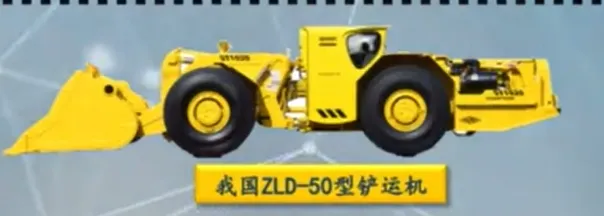
Whether diesel-powered or electric-powered, the operation methods of loaders are similar. During operation, the loader acts like a well-trained "strongman," first scooping the ore into the bucket. It accurately controls the angle and depth of the bucket so that the bucket can accommodate the maximum amount of ore, ensuring the efficiency of each scoop. Then, the loader, carrying the bucket full of ore, moves quickly and steadily along a predetermined route to the chute. When it reaches the chute, the loader, like a graceful dancer, flexibly flips the bucket, accurately unloading the ore. The whole process is smooth and efficient, demonstrating the loader's high operational capability. In some large mines, loaders work busily, continuously transporting ore from the mining site to the chute, providing strong support for subsequent ore processing and transportation.
(II) Advantages
Loaders have many significant advantages over other ore transportation equipment.
It does not use an air rope, which means its transport distance is unlimited. Unlike loaders that are limited by the length of the air rope, loaders can freely travel in various areas of the mine without worrying about being unable to reach their destination due to insufficient air rope length. It can flexibly plan its driving route according to the mine's mining layout and transportation needs, transporting ore to more distant locations, greatly improving transportation flexibility and efficiency. In some large open-pit mines, loaders can easily travel back and forth between the mining area and the processing area, and even if the distance is far, they can efficiently complete the transportation task.
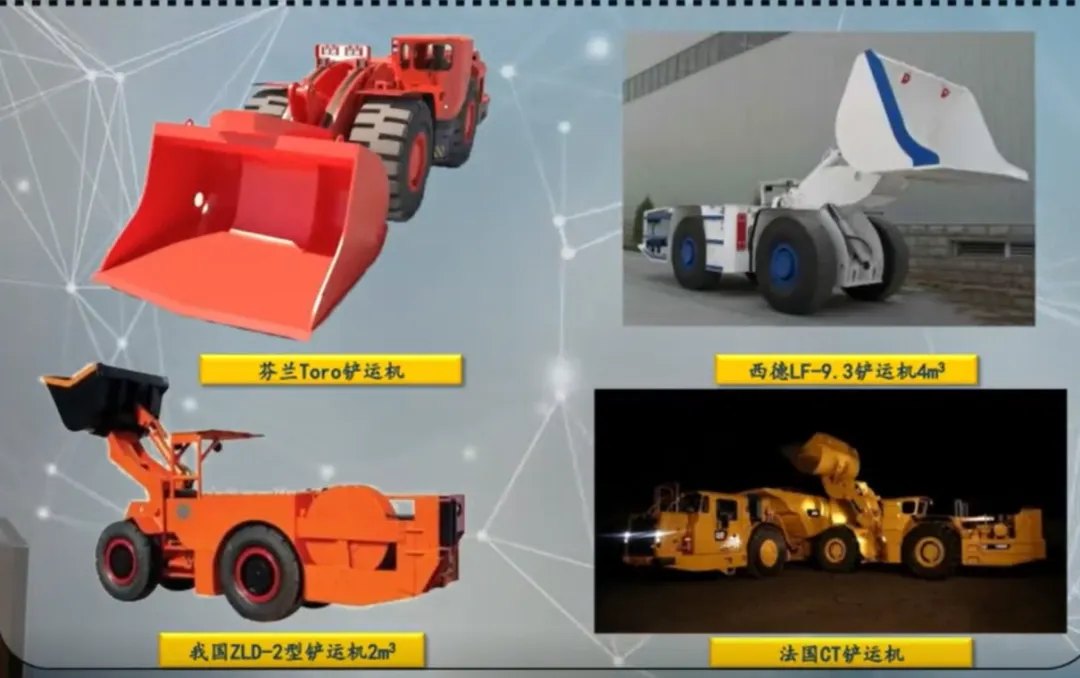
The loader's strong climbing ability allows it to adapt to the complex terrain of mines. Mines often have roads and areas with various slopes. With its powerful engine and excellent design, the loader can easily climb steep slopes and transport ore to designated locations. It's like an agile "goat," freely moving on rugged mountain roads, unhindered by the ups and downs of the terrain. In some mountainous mines, loaders need to frequently go up and down slopes, but their excellent climbing ability ensures the smooth progress of transportation.
A large bucket capacity is another significant advantage of loaders, with bucket capacities ranging from 0.75 to 10.7m³. A larger bucket capacity means more ore can be loaded each time, reducing the number of trips and improving transportation efficiency. In the same amount of time, the loader can transport more ore, providing sufficient raw material support for mine production. In some large-scale mines, the loader's large-capacity bucket can quickly load and transport large quantities of ore, meeting the mine's ore transportation volume requirements.
Fast travel speed is also one of the advantages of loaders; they can complete ore transportation tasks in a short time. The fast travel speed allows loaders to operate efficiently in mines, reducing the ore's dwell time during transportation and improving the efficiency of the entire production process. The loader is like a high-speed "train," speeding along the mine roads, quickly transporting ore to its destination. In mines with high transportation efficiency requirements, the loader's fast travel speed makes it the preferred transportation equipment.
Due to these advantages, loaders are highly efficient and well-suited for large mines. In large mines, the amount of ore that needs to be transported daily is enormous. Loaders can fully utilize their advantages to complete transportation tasks quickly and efficiently, ensuring the normal production of the mine. Abroad, mines in countries such as Canada, the United States, and Germany widely use loaders. These countries have relatively mature mining industries and a high demand for efficient transportation equipment, and loaders meet their needs. In China, some large and medium-sized mines, such as Meishan Iron Mine and Beiminghe Iron Mine, have also widely adopted loaders. These mines have improved production efficiency and reduced transportation costs by using loaders, achieving good economic benefits.
(3) Existing Problems
However, loaders also have some problems in practical applications.
Exhaust purification is a significant problem faced by diesel-powered loaders. Because diesel combustion produces a large amount of exhaust gas, although the machine is equipped with an exhaust purification device with a minimum air volume of 2.1m³/min per brake horsepower, the actual amount of exhaust gas produced far exceeds this standard. These exhaust gases contain harmful substances such as carbon monoxide, hydrocarbons, and nitrogen oxides. If not effectively treated, they will seriously harm the mine's working environment and the health of the workers. To solve this problem, on the one hand, it is necessary to continuously improve exhaust purification devices and improve their purification efficiency; on the other hand, it also promotes the development of electric loaders because electric loaders do not have exhaust emissions.
Loaders also have the problem of high maintenance requirements. Because loaders operate in harsh mine environments, they are often subjected to impacts from ore, vibrations, and erosion from dust and moisture, causing their components to be easily damaged and requiring frequent maintenance and replacement. This not only increases maintenance costs but also leads to extended equipment downtime, affecting the mine's production schedule. In some mines, loader maintenance work consumes a large amount of manpower and material resources, becoming a burden on production.
Severe tire wear is also a common problem with loaders. On mine roads, there are often sharp rocks and rugged surfaces that can severely wear down the loader's tires. Frequent tire replacement not only increases costs but also affects the equipment's normal operation. To reduce tire wear, some mines have adopted measures such as improving road conditions and selecting wear-resistant tires, but the effect is limited.
Loaders have high requirements for roadway specifications. Due to their large size, they require a large operating space, which requires the mine's roadway specifications to be correspondingly increased. Increasing roadway specifications not only increases the mine's construction costs but also has a certain impact on the mine's geological structure. In some old mines, due to the small roadway specifications, the operation requirements of loaders cannot be met, limiting the application of loaders.
In terms of production efficiency, the utilization rate of loaders averages 60%, which means that 40% of the time the equipment is idle or operating inefficiently. Its daily output is 200t, and the optimal transport distance is 150-200 meters, reaching 300 meters in individual cases. When the transport distance exceeds the optimal range, the transportation efficiency will decrease significantly. These data indicate that loaders still have room for improvement in production efficiency and transportation distance. It is necessary to further optimize equipment performance and operation processes to improve their overall operating efficiency.
Comprehensive Evaluation
(1) Summary of Advantages
Self-propelled equipment has shown many significant advantages in ore transportation, making it an important part of mining operations.
Self-propelled equipment is versatile; it's like an all-around "mine worker." It can not only handle ore extraction and transportation but also play an important role in preparation engineering. In the daily operation of mines, self-propelled equipment can flexibly shuttle between various operating areas, completing road clearing work and creating good conditions for the passage and operation of other equipment. It can also transport various materials, delivering necessary supplies to designated locations in a timely manner, ensuring the smooth progress of mine production. In some small mines, a single self-propelled unit may need to perform multiple roles, extracting ore, transporting the extracted ore to processing locations, and transporting various materials such as explosives and support materials, fully demonstrating its versatility.
Mobility and flexibility are another outstanding advantage of self-propelled equipment. It can adapt to multi-stage and multi-segment operating environments, working efficiently in both shallow and deep areas of the mine. For mines with inclined ramps, self-propelled equipment is even more at home; it can easily exit the surface for maintenance and repair. This reduces the difficulty and risk of equipment maintenance underground and improves maintenance efficiency, ensuring that the equipment can quickly resume normal operation. In some large mines, due to the large mining area, multi-stage and multi-segment mining operations are required. Self-propelled equipment can quickly adjust its operating location and method according to different operating requirements and site conditions, achieving efficient ore transportation.
High productivity is one of the significant advantages of self-propelled equipment. Due to its convenient maneuverability, it can quickly move from one work point to another, greatly reducing equipment downtime and increasing pure working time. Moreover, self-propelled equipment usually has higher power and strong transportation capacity, enabling it to transport more ore per unit of time, thereby improving overall work efficiency. In some mines that use self-propelled equipment for ore transportation, their production efficiency has significantly improved compared to traditional transportation methods, meeting the needs of large-scale mine production.
Self-propelled equipment also performs excellently in terms of safety. Its use reduces the physical labor intensity of workers, freeing them from heavy ore handling work. With the widespread application of self-propelled equipment, the number of underground workers has correspondingly decreased, which to some extent reduces the probability of safety accidents. Moreover, self-propelled equipment has a high degree of automation and can replace workers in some dangerous environments, further ensuring the safety of workers' lives. At the same time, due to the improvement in production efficiency, the mine's production cycle is shortened, which also reduces the safety risks brought about by long-term operation.
(II) Analysis of Disadvantages
Although self-propelled equipment has many advantages in ore transportation, there are also some disadvantages that cannot be ignored. These disadvantages limit its application in certain scenarios and prompt us to consider directions for improvement.
The parts of self-propelled equipment are often quite expensive, which is a prominent problem it faces. Taking a loader as an example, the price of key components such as tires and engines is high. Once these parts are damaged and need to be replaced, it will bring a significant economic burden to mining enterprises. Moreover, the service life of these parts is relatively short. In the harsh working environment of mines, parts are easily subject to wear, corrosion, and other damage, requiring frequent replacement. In some mines, the tires of loaders need to be replaced every few months on average, which not only increases equipment maintenance costs but also affects the normal use of the equipment.
Diesel-powered self-propelled equipment has problems with high air volume requirements and high power consumption. Diesel combustion consumes a large amount of oxygen. To ensure the normal operation of the equipment, the mine needs to provide sufficient air volume, which puts considerable pressure on the mine's ventilation system. Moreover, the energy consumption of diesel-powered equipment is high, with power consumption significantly higher than that of some other transportation equipment. This not only increases the mine's energy costs but also places higher demands on the mine's energy supply system. In some areas with tight energy supplies, the use of diesel-powered self-propelled equipment is somewhat limited.
Self-propelled equipment requires a larger loading lane cross-section, which is another challenge it faces in application. Due to the large size of self-propelled equipment, to ensure that it can smoothly pass and operate in the roadway, a larger roadway space is required. This requires mines to increase the cross-sectional dimensions of the loading lanes during construction. Increasing the roadway cross-section not only increases the construction cost of the mine but may also have an impact on the mine's geological structure, increasing the safety risks of mining. In some old mines, because the original roadway cross-section is small and cannot meet the operational requirements of self-propelled equipment, the roadway needs to be modified. This not only consumes a large amount of manpower, material resources, and financial resources but also affects the normal production of the mine.
Self-propelled equipment requires a large amount of maintenance, and the operational skill requirements are also high. In the complex working environment of mines, various components of self-propelled equipment are easily damaged and require frequent maintenance and repair. This not only requires professional maintenance personnel and equipment but also requires a large amount of maintenance time, affecting the efficiency of equipment use. Moreover, the operation of self-propelled equipment requires professional skills and experience. Operators need to be familiar with the equipment's performance, operating procedures, and safety regulations; otherwise, it is easy to cause safety accidents or equipment damage. In some mines, due to the insufficient skill level of operators, equipment malfunctions occur frequently, which has an adverse impact on mine production.
(III) Scope of Application and Prospects
Self-propelled equipment has a wide range of applications in the mining field and can be used in conjunction with various mining methods to play its efficient role in ore transportation. It is suitable for the room and pillar method. In this mining method, self-propelled equipment can flexibly shuttle between mining rooms and pillars, transporting the mined ore out in time and improving mining efficiency. In the sublevel stoping and sublevel caving methods, self-propelled equipment can meet the ore transportation needs of different stages and sublevels, ensuring the continuity of mining operations. In the upward layered filling mining method, self-propelled equipment can transport filling materials to designated locations and transport the mined ore away at the same time, achieving efficient collaborative operation of mining and filling. In the pillarless sublevel caving method, self-propelled equipment is an indispensable transportation tool. It can quickly transport the collapsed ore out in a complex roadway environment, ensuring the smooth progress of mining operations.
With the continuous development of technology, self-propelled equipment is expected to see more improvements and breakthroughs in the mining field. In terms of technological innovation, the research and development and application of new equipment such as electric loaders will gradually solve the problems of exhaust emissions and high energy consumption of diesel-powered equipment. By adopting advanced battery technology and electric drive systems, electric loaders will have higher energy efficiency and lower operating costs. With the continuous advancement of automation and intelligent technology, self-propelled equipment will achieve more intelligent operation and management. Future self-propelled equipment may be equipped with advanced sensors and control systems that can monitor the equipment's operating status, ore transportation conditions, and the surrounding working environment in real-time, achieving functions such as automatic obstacle avoidance, automatic loading and unloading, and automatic scheduling. This will not only improve the equipment's operating efficiency and safety but will also further reduce labor costs. With the development of materials science, the components of self-propelled equipment will use more durable and high-strength materials, thereby extending the service life of the equipment and reducing maintenance costs.