-
About Us
-
-
-
Contact Us

Deep Metal Ore Mining Funnel-Shaped Bottom Structure — Black Diamond Report
Preface
In the field of deep metal mine mining, the funnel-shaped bottom structure plays a crucial role and is a key link to ensure efficient and safe mining operations. Its design rationality and stability directly affect the cost, efficiency, and resource recovery rate of the entire mining operation. From the perspective of structural design, the dimensions of its various parts are interrelated and mutually restrictive, jointly supporting the operation of the entire mining system.
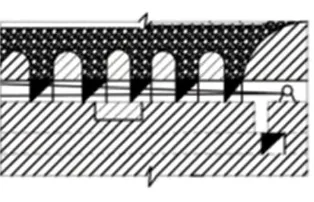
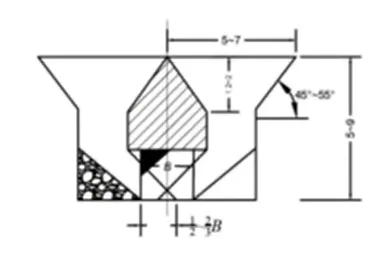
The funnel-shaped bottom structure mainly consists of the bottom pillar, funnel, and funnel opening, each bearing unique functions and working together to ensure that ore can be smoothly transported from the mining face to subsequent processing stages. The bottom pillar, as the key structure supporting the entire upper ore body and mining space, generally has a height between 8 - 15m. Although it is just a simple support, it accounts for 16 - 20% of the ore block's volume. This proportion is not arbitrary but derived from extensive practice and scientific calculation, ensuring the bottom pillar has sufficient strength to support the weight of the upper ore body while considering ore recovery efficiency to avoid excessive ore volume occupied by the pillar causing resource waste. The funnel spacing is usually controlled between 5 - 7m, with each funnel bearing an area of 30 - 50m². This size setting allows the funnels to be evenly distributed at the bottom of the mining face, ensuring ore can uniformly converge into the funnels, facilitating subsequent transportation and processing. The funnel slope angle is maintained at 45 - 55° (external friction angle). This angle is designed based on the natural repose angle of the ore and the flow characteristics of the ore inside the funnel, ensuring smooth sliding of ore within the funnel and reducing ore blockage and accumulation. Common funnel shapes are square and circular. Each shape has its advantages and disadvantages in practical application. Square funnels are relatively convenient in construction and layout, better adapting to the shape and size of the mining face; circular funnels perform better in ore flow, reducing friction between ore and funnel walls and increasing ore flow speed.
The funnel-shaped bottom structure is suitable for various ore conditions, especially when the ore and surrounding rock are moderately stable, allowing it to perform optimally. When the ore body has a relatively regular attitude and the ore does not lump or spontaneously combust, the funnel-shaped bottom structure can operate stably, ensuring smooth mining operations. In mining of steeply inclined, extremely thin vein to medium-thick ore bodies, the funnel-shaped bottom structure, with its unique advantages, becomes the preferred bottom structure form. It can effectively adapt to the ore body's shape and occurrence conditions, improve ore recovery rate, and reduce mining costs.
Analysis of Key Structural Dimensions
Bottom Pillar Height and Ore Volume Proportion
The bottom pillar height ranges between 8 - 15m. This height range is set based on comprehensive consideration of multiple factors. From a mechanical perspective, the bottom pillar must withstand the enormous pressure of the upper ore body. If the height is too low, it cannot provide sufficient support, easily causing the pillar to be crushed, which may lead to collapse of the mining face roof, endangering miners' lives and the normal operation of mining equipment. In some deep metal mines, as mining depth increases, ground pressure also increases, requiring taller bottom pillars to resist ground pressure. The bottom pillar accounts for 16 - 20% of the ore block volume. This proportion aims to balance ore recovery and mining face stability. If the pillar occupies too little ore volume, although ore recovery increases, the pillar's strength weakens, increasing the risk of mining face collapse; conversely, if the pillar occupies too much ore volume, it causes resource waste and increases mining costs. Therefore, in actual mining, the bottom pillar height and ore volume proportion need to be reasonably adjusted according to the specific conditions of the ore body, such as thickness, dip angle, and physical-mechanical properties of ore and surrounding rock.
Funnel Spacing and Bearing Area
Funnel spacing is controlled between 5 - 7m, with each funnel bearing an area of 30 - 50m². This size design has important practical significance. From the perspective of ore flow, appropriate funnel spacing ensures ore is evenly distributed to each funnel at the bottom of the mining face, avoiding ore concentration in a few funnels while others remain idle. When funnel spacing is too large, ore may accumulate and block during flow, affecting flow efficiency; when spacing is too small, the number of funnels increases, raising the cost of mining engineering. Reasonable determination of funnel bearing area is also crucial, ensuring each funnel can effectively collect ore within a certain range, improving ore recovery efficiency. In some mines with thicker ore bodies, appropriately increasing funnel bearing area can reduce the number of funnels and lower mining costs. Additionally, reasonable design of funnel spacing and bearing area can improve mining efficiency, reduce mining equipment operation time and energy consumption, thereby lowering production costs.
Funnel Slope Angle
The funnel slope angle is maintained at 45 - 55° (external friction angle). This angle choice is based on the natural repose angle of the ore and the flow characteristics of ore inside the funnel. The natural repose angle of ore refers to the maximum angle formed between the ore's slope surface and the horizontal plane when the ore is naturally piled. When the funnel slope angle is less than the ore's natural repose angle, ore tends to accumulate inside the funnel and is difficult to slide smoothly; when the funnel slope angle is too large, although ore slides faster, it increases the impact force of ore on the funnel walls, shortening the funnel's service life. Within the 45 - 55° angle range, ore can slide relatively smoothly along the funnel slope under gravity while reducing wear on the funnel walls. Different types of ore have different physical properties and natural repose angles, so in practical application, the funnel slope angle needs to be appropriately adjusted according to the specific ore conditions. For some ores with higher viscosity, the funnel slope angle can be increased to ensure smooth ore sliding.
Funnel Diameter and Opening Specifications
Common funnel diameter and opening specifications are 1.8×1.8m² and 2×2m², sometimes increased to 2.5×2.5m². Changes in these specifications significantly impact mining operations. With continuous development of mining technology and increasingly large mining equipment, increasing funnel diameter and opening specifications can improve ore throughput capacity to meet large-scale mining demands. Larger funnel diameters and openings allow larger ore blocks to pass more easily, reducing ore blockage at the funnel and improving mining efficiency. However, increasing specifications also brings challenges, such as higher stability requirements for the bottom pillar, increasing the risk of pillar failure and mining face collapse. Additionally, larger funnel diameters and openings increase the difficulty and cost of mining engineering, requiring larger mining equipment and higher technical levels for construction and maintenance. Therefore, when deciding whether to increase funnel diameter and opening specifications, factors such as ore body occurrence conditions, mining equipment performance, and mining costs need to be comprehensively considered.
Position of the intersection between the funnel slope and the funnel neck
The intersection between the funnel slope and the funnel neck is located 1.5 - 2m above the top plate of the scraper roadway. This position setting is of great significance for ensuring the stability of the bottom pillar. If the intersection position is too low, the ore passing through the funnel neck is likely to exert a large impact force on the bottom pillar, which over time can cause damage to the bottom pillar and affect the stability of the mining face; if the intersection position is too high, it will increase the height of the funnel, wasting ore resources and increasing the difficulty and cost of mining engineering. Controlling the intersection position within the range of 1.5 - 2m can effectively buffer the impact force on the bottom pillar when ore passes through the funnel neck, reducing damage to the bottom pillar. A reasonable intersection position also ensures that ore inside the funnel can smoothly flow into the funnel neck, avoiding ore accumulation and blockage. In actual mining, it is necessary to strictly follow design requirements and precisely control the position of the intersection between the funnel slope and the funnel neck to ensure the safety and efficient mining of the mining face.
Relationship between funnel diameter and electric scraper roadway
The slope of the ore chute should occupy about 1/2 - 2/3 of the scraper roadway width. This relationship has an important impact on electric scraper operations and ore transportation. When the slope of the ore chute occupies too small a proportion of the scraper roadway width, ore tends to accumulate on one side of the scraper roadway during sliding, affecting the efficiency of the electric scraper and making it difficult for the scraper to evenly rake ore into the chute; when the proportion is too large, it reduces the effective width of the scraper roadway, affecting the passage and operation of the electric scraper, increasing friction between the scraper and ore, and reducing the scraper's service life. Within the 1/2 - 2/3 proportion range, ore can be evenly distributed on the ore chute slope, facilitating the electric scraper to rake ore into the chute and improving ore transportation efficiency. A reasonable relationship between funnel diameter and electric scraper roadway can also reduce ore residue and improve ore recovery rate. In actual production, it is necessary to adjust the proportion of the ore chute slope occupying the scraper roadway width according to the model and performance of the electric scraper, as well as the nature of the ore and sliding conditions, to ensure smooth electric scraper operation and ore transportation.
Funnel arrangement method
Symmetrical arrangement on both sides
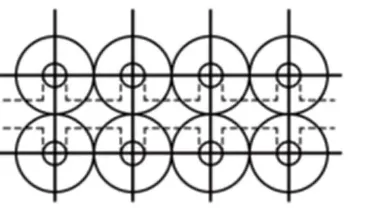
In the arrangement method of the funnel bottom structure on both sides, symmetrical arrangement is a relatively common form. Symmetrical arrangement means the funnel is symmetrically distributed along both sides of the electric scraper roadway or other transportation channels. This arrangement can ensure relatively even distribution of ore at the bottom of the mining face to some extent. From the overall layout of the mining face, it has good symmetry, facilitating construction and management. In some mines with relatively regular ore body strike and little thickness variation, symmetrical arrangement can fully utilize its advantages. When the ore body is horizontal or nearly horizontal and thickness is relatively stable, symmetrical arrangement allows each funnel to bear a relatively balanced ore sliding task, which helps improve overall ore output efficiency. In the mining of a certain iron ore, where the ore body thickness is relatively uniform, symmetrical funnel arrangement was adopted. Each funnel covers basically the same area, and during mining, ore can smoothly flow from the mining face through the funnel into the transportation channel, ensuring continuous mining operations.
However, symmetrical arrangement also has some drawbacks. Due to the symmetrical distribution of funnels, in some cases, it may cause uneven pressure distribution on the bottom pillars. When properties such as ore hardness and block size vary in different areas of the mining face, symmetrical funnel arrangement causes the bottom pillars to experience different magnitudes of ore impact forces at different locations, which over time can cause local damage to the bottom pillars and affect their overall stability. In some deep mines where ground pressure is large and unevenly distributed, symmetrical funnel arrangement may exacerbate uneven stress on the bottom pillars, increasing the risk of pillar collapse. Symmetrical arrangement may also lead to more ore residue in the rib area. During ore sliding, due to the symmetrical distribution of funnels, ore tends to accumulate in the rib area, making it difficult to fully slide through the funnel, resulting in ore waste and reduced ore recovery rate.
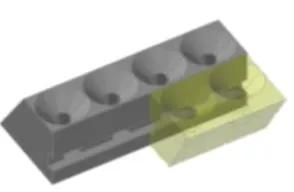
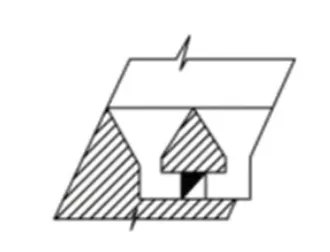
Staggered arrangement on both sides
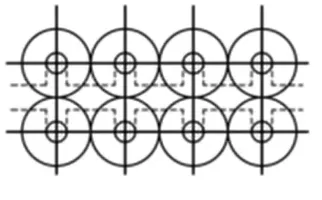
Staggered arrangement has significant advantages in the funnel bottom structure and has become a more widely used arrangement method. Staggered arrangement means the funnels are arranged alternately on both sides of the electric scraper roadway, making the funnel distribution more even. Compared with symmetrical arrangement, staggered arrangement can better adapt to various changes in the ore body. Whether the ore body thickness, dip angle, or ore properties change, staggered arrangement can ensure smooth ore sliding through reasonable funnel distribution. In the mining of a certain lead-zinc ore with large thickness variation, after adopting staggered funnel arrangement, each funnel effectively collects surrounding ore. Even in thinner ore body areas, reasonable funnel spacing and arrangement ensure sufficient ore sliding, greatly improving ore recovery rate.
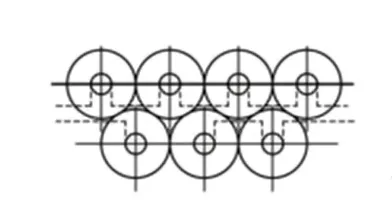
Staggered arrangement causes less damage to the bottom pillars. Due to the staggered distribution of funnels, the impact force of ore on the bottom pillars during sliding is more dispersed, and the pressure distribution on the bottom pillars is relatively even, reducing the possibility of local overloading and damage to the bottom pillars. In some mines, long-term observation and practice have shown that bottom pillars with staggered funnel arrangement have significantly extended service life and correspondingly reduced maintenance costs. Staggered arrangement also reduces ore residue in the rib area. The staggered funnels make ore flow more smoothly in the rib area, reducing the possibility of ore accumulation and effectively lowering the amount of ore residue, thereby improving ore recovery efficiency. In the mining of some steeply inclined ore bodies, staggered funnel arrangement allows ore to pass through the rib area faster under gravity, reducing ore residence time in the rib area and thus lowering the proportion of ore residue there.
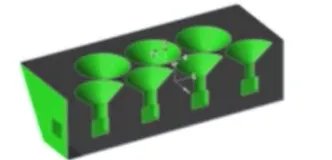
When maintaining scraper roadways with wooden supports or metal frames, staggered arrangement also has certain limitations. Due to the staggered ore piles causing the scraper bucket to run in a zigzag path, the scraper bucket needs to frequently change direction during operation, which easily pulls down the supports. In a certain mine using wooden supports to maintain the scraper roadway, the staggered funnel arrangement caused the scraper bucket to pull down supports multiple times during ore extraction, not only affecting ore extraction efficiency but also increasing safety hazards. Therefore, when choosing a funnel arrangement method, it is necessary to comprehensively consider factors such as the support method of the scraper roadway and the specific conditions of the ore body, weigh the pros and cons, and select the most suitable arrangement method.
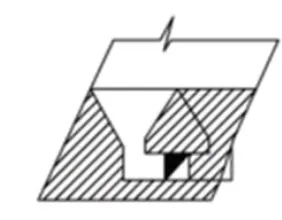
Application cases of funnel bottom structure
In actual mining operations, the funnel-shaped bottom structure is commonly seen. Taking a large lead-zinc mine as an example, the ore body is relatively thick and has a complex shape. During the mining process, a funnel-shaped bottom structure was used, with the bottom pillar height set at 10m, funnel spacing controlled at 6m, each funnel bearing an area of about 40m², the funnel slope angle maintained at 50°, and the funnel diameter and opening specifications at 2×2m². The funnels were arranged staggeredly on both sides of the electric scraper roadway. In practical application, this funnel-shaped bottom structure demonstrated good performance. Ore could smoothly flow from the mining face through the funnels into the electric scraper roadway, then be scraped into the short chute and transported by mine cars in the haulage drift. Due to the even distribution of the funnels, the pressure borne by the bottom pillars was relatively balanced. Throughout the mining process, no significant damage occurred to the bottom pillars, effectively ensuring the stability of the mining face. The staggered arrangement of the funnels significantly reduced residual ore at the ridge, and the ore recovery rate increased by about 10% compared to previous bottom structures, greatly improving resource utilization.
Similarly, in a certain gold mine, the ore body conditions are relatively special, with medium stability in both ore and surrounding rock, and the ore body has slight undulations. During mining, a funnel-shaped bottom structure was carefully designed according to the specific conditions of the ore body. The bottom pillar height was 12m, funnel spacing 5m, funnel bearing area 35m², funnel slope angle 48°, and the funnel diameter and opening specifications were enlarged to 2.5×2.5m² to accommodate the nature of the ore and the scale of mining. The funnel arrangement also adopted a staggered layout. In actual production, the enlarged funnel diameter and opening specifications effectively improved the ore throughput capacity, reducing blockages at the funnels and significantly enhancing ore output efficiency. The staggered funnel arrangement made ore output more uniform, reducing ore loss and dilution during the mining process. The ore dilution rate decreased by about 5 percentage points compared to before, bringing considerable economic benefits to the mine.