-
About Us
-
-
-
Contact Us

Centralized Layout: A Typical Model for Industrial Site Intensification—Heijin Gang Broadcast
Centralized Layout: A Typical Model for Industrial Site Intensification
In the field of mining engineering, the layout of auxiliary shafts significantly impacts a mine's production efficiency, safety assurance, and operational costs. As a common and uniquely advantageous approach, the centralized layout has been widely adopted in modern mine construction. Its core types include central centralized arrangement and flank-centralized arrangement, each with distinct characteristics tailored to different geological conditions and mining requirements.
Centralized Deployment: Efficient Collaboration in the Jingtian Core Area
Centralized deployment will soon see the main and auxiliary shafts arranged side by side along the central axis of the mining field, creating a highly efficient, three-dimensional transportation hub. In practical operations, the distance between the two shafts must maintain a safe margin greater than 30 meters to ensure the stability of the shaft structures as well as operational and construction safety. This layout approach demonstrates significant advantages in terms of engineering economics, transportation efficiency, and production management.
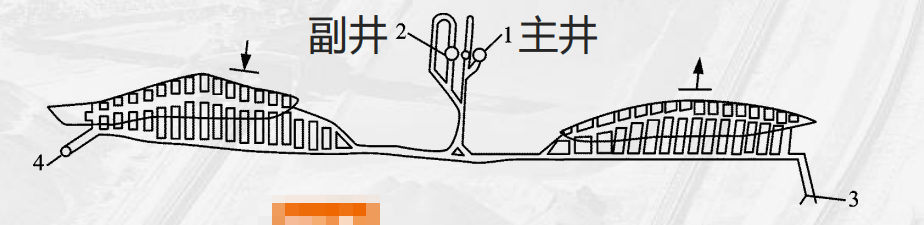
From an engineering-economic perspective, the centralized arrangement significantly reduces the volume of rock excavation required for the main access tunnels—by as much as 30% to 40%, according to statistics—thereby substantially lowering development costs. Additionally, the construction period can be shortened by 15% to 20% accordingly, enabling the mine to enter production more rapidly and achieve economic benefits ahead of schedule. Furthermore, the compact layout of the shaft bottom car shed, combined with the highly centralized routing of various utility pipelines, further minimizes both construction and maintenance expenses.
In terms of transportation efficiency, centralized arrangement naturally offers significant advantages. Heavy vehicles utilize the natural slope of the ore body for gravity-assisted transport, which not only reduces energy consumption during the process but also enhances transportation speed. Underground transportation power is reduced by 25% compared to decentralized systems, leading to substantial improvements in system energy optimization and making the entire transportation system more efficient and energy-saving.
In terms of production management, the centrally arranged industrial sites are contiguous and well-integrated, allowing for an integrated design of ventilation systems that form a unified ventilation network, ensuring smooth airflow underground. The drainage pump stations exhibit significant economies of scale, enabling centralized handling of underground water inflows and significantly enhancing drainage efficiency. Additionally, during shaft deepening operations, the convenience of reverse excavation construction is improved, reducing both construction complexity and time-related costs.
However, centralized deployment also carries certain potential risks. In terms of safety interference, fire incidents could trigger cascading disasters. For instance, if a fire breaks out in the main shaft or the auxiliary shaft, high temperatures, smoke, and toxic gases may rapidly spread to the other shaft, jeopardizing the overall safety of the mine. Additionally, when the main shaft uses skip hoisting, dust generation can negatively impact the air quality entering the auxiliary shaft, reducing it by 10%–15%. This necessitates the installation of accompanying dust removal and purification equipment to maintain optimal underground air quality. Regarding system redundancy, a single shaft failure could disrupt the entire mine's transportation operations. If either the main shaft or the auxiliary shaft encounters a malfunction, the mine's transportation system would come to a standstill. Therefore, it is essential to establish temporary emergency lifting channels to ensure continuous transportation operations under emergency conditions.
Side-wing centralized arrangement: A balanced solution optimized for a single side.
Side-wing centralized arrangement refers to the clustered layout of main and auxiliary shafts, positioned on one side of the mining field while maintaining the same safety spacing requirements as the centrally arranged configuration. This setup creates a single-sided transportation-dominant pattern. Such an arrangement offers distinct advantages in terms of development costs, ventilation efficiency, and operational convenience.
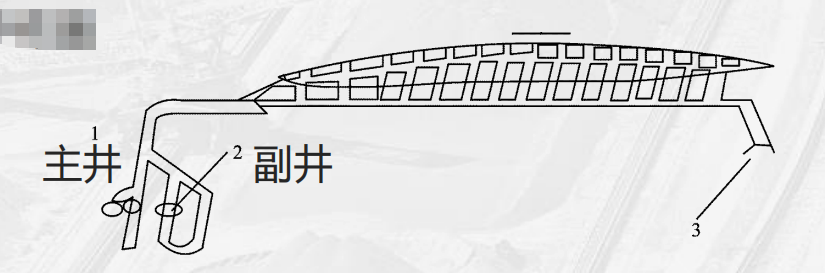
In terms of development costs, the volume of stone gateways arranged in a side-aisle configuration is comparable to that of the centrally concentrated system. However, it offers a significant advantage in terms of earthwork volume required for industrial site leveling, reducing it by 10%–15%. This approach is particularly well-suited to mountainous terrain conditions, thereby lowering both the complexity and cost of site construction.
In terms of ventilation efficiency, the strategically arranged side wings leverage natural wind pressure to create localized ventilation advantages, effectively reducing energy consumption for ventilation. The centralized drainage system features balanced coverage, ensuring timely handling of water inflows from one side of the mining field. Additionally, the well shaft deepening technology has a well-established development path, providing a solid foundation for the long-term growth of the mine.
In terms of management convenience, the centrally arranged auxiliary transportation routes on the side are streamlined, enhancing material handling efficiency by 20%. This design facilitates centralized control for management personnel, making it well-suited for the intensive management requirements of small to medium-sized mines.
The centralized layout of the side entries also has several core limitations. In terms of transportation energy consumption, heavy-load transport distances increase by 15%–20% compared to the central system, leading to higher underground transportation power requirements and, consequently, increased energy costs. Regarding disaster risks, a single-side entry incident could potentially disrupt the entire mine's transportation network. If a fire or collapse occurs in the side entry, it may severely impact the mine's overall transportation system. Therefore, it is essential to strengthen fire isolation facilities and enhance emergency response plans to improve the mine's resilience against disasters.
Distributed Layout: Stereoscopic Arrangement of Functional Zones
Distributed layout, as a mode tailored to complex geological conditions and large-scale mining requirements, provides robust support for the efficient and safe operation of modern mines through its unique spatial arrangement and functional zoning. This layout approach primarily includes the central diagonal type and the lateral diagonal type, each offering distinct advantages in terms of ventilation safety, transportation organization, and site planning, thereby demonstrating diverse engineering application value.
Central Diagonal Type: An Innovative Design for Ventilation Safety
The central diagonal arrangement places the main shaft at the center of the mining field, while the auxiliary and ventilation shafts are positioned diagonally on opposite sides of the field, creating a stable "one main and two auxiliary" configuration. In practical engineering applications, to meet ventilation, safety, and construction requirements, the distance between the two shafts is typically increased to 50–80 meters, depending on the scale of the mining field, ensuring both the independence and coordinated operation of each shaft.
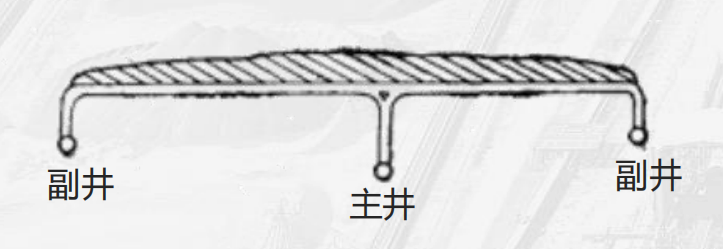
The ventilation advantage is a key highlight of the central diagonal arrangement. Fresh air is independently drawn in through the auxiliary shaft, while stale air is directly exhausted via the ventilation shaft, creating a straight-line ventilation path that significantly reduces the circulation time of airflow underground. According to actual monitoring data, the underground air quality compliance rate has improved by 30% compared to centralized systems. Notably, in high-temperature mines, this system delivers remarkable cooling effects, effectively enhancing the working environment and boosting worker productivity.
In terms of safety performance, the centrally positioned diagonal arrangement of dual independent shaft systems provides a double layer of protection for mine safety. This design reduces the risk of fire propagation by 60%. In the event of a fire, relevant connecting passages can be swiftly sealed off, enabling localized ventilation and effectively containing the disaster within the smallest possible area. Additionally, in emergency situations, personnel can evacuate through multiple channels—such as the main shaft, auxiliary shaft, and dedicated ventilation shafts—allowing for efficient and rapid dispersal, thereby enhancing overall evacuation efficiency.
In terms of system adaptation, the central diagonal arrangement is well-suited for large-span mining areas, reducing transportation effort by 10% compared to the side-wing centralized layout, thereby lowering transportation energy consumption. However, due to the increased length of the stone gateways, capital investment rises by 20%–25%, necessitating careful consideration of the balance between financial input and operational efficiency during the initial planning phase.
The central diagonal arrangement also presents several engineering challenges. The dispersed layout necessitates the construction of industrial sites in separate zones, increasing the complexity of the ground transportation system and extending the initial infrastructure phase by 3 to 6 months. Moreover, the coordinated operation of multiple well shafts demands precise scheduling, requiring simultaneous upgrades to the information management system to ensure efficient collaboration among all shafts.
Diagonal Wing Configuration: Adaptive Approach to Boundary Conditions
Diagonal arrangement on the flank refers to positioning the main and auxiliary shafts at opposite wings of the mining area, creating a diagonal configuration such as "main in the east, auxiliary in the west" or "main in the south, auxiliary in the north." This layout is particularly well-suited for complex geological conditions characterized by long orebody trends and steep dip angles.
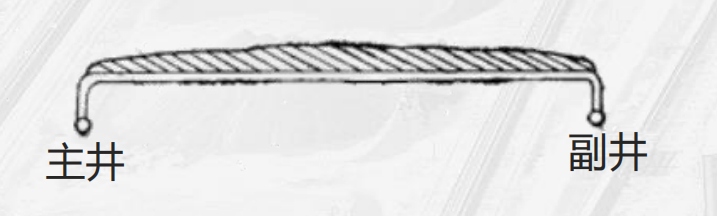
Geological adaptability is the core advantage of flank diagonal well placement. By strategically selecting wellbore locations, unfavorable geological formations such as fault fracture zones can be avoided, improving wellbore stability by 40% and reducing construction complexity by 15% compared to central well placement. This approach not only minimizes safety risks during construction but also lowers well maintenance costs, ensuring the long-term stable operation of the mine.
In terms of ventilation safety, the dual shafts arranged in a diagonal configuration on the side wings provide independent intake air supply, ensuring that over 95% of the air sources meet quality standards. In the event of a fire, this system enables single-side closed-pressure ventilation, effectively preventing the spread of flames and buying valuable time for personnel evacuation as well as firefighting and rescue operations.
In terms of transportation organization, the heavy-duty vehicles arranged in a diagonal formation along the flanks ascend the slope following the dip direction of the orebody, making it suitable for either skip hoisting systems in inclined shafts or trackless rubber-tired vehicle transportation. This approach offers greater flexibility compared to centralized layouts. Depending on the geological conditions of the orebody and the specific mining techniques employed, operators can select the most appropriate transportation method to enhance overall efficiency.
The diagonal arrangement of the side wings also has several critical shortcomings. In terms of energy consumption, heavy vehicles climbing uphill results in a 30%–40% increase in transportation work, necessitating an upgraded system configuration with one additional gear to meet the higher power demand, thereby raising energy costs. Regarding management expenses, the dispersed layout of industrial sites leads to longer ground-level connecting passages, reducing production scheduling efficiency by approximately 10%. To address this issue, it is essential to enhance information-based management systems and provide comprehensive staff training, ensuring improved operational efficiency. 3
Core Elements for Selection Decisions and Engineering Recommendations
Technical and Economic Comparison Matrix
In the selection of auxiliary shaft layout methods, the techno-economic comparison matrix serves as a crucial tool. It systematically evaluates the performance of various layout options across multiple key indicators, providing a quantitative basis for decision-making. Below is a detailed comparison of four layout approaches: central centralized, flank centralized, central diagonal, and flank diagonal configurations.
| Indicator Type | Centralized Centralization | Side-wing centralized approach | Central Diagonal Type | Side-wing diagonal style |
| Expand Project Scope | Minimum | Medium | Larger | Large |
| Transportation Efficiency | Minimum | Large | Medium | Maximum |
| Air Quality | Medium | Medium | Optimal | Excellent |
| Security Redundancy | Low | Low | High | High |
| Industrial Site Integration | Optimal | Excellent | Medium | Poor |
From the perspective of development engineering volume, the central centralized system stands out due to its concentrated shaft arrangement, resulting in the shortest drift length and minimal engineering workload, thereby effectively reducing initial investment costs. The side-wing centralized system ranks second, offering a moderate level of drift engineering volume but potentially providing certain advantages in site leveling. In contrast, both the central diagonal and side-wing diagonal systems feature dispersed shaft layouts, leading to increased drift lengths and consequently larger development engineering volumes, which in turn elevate the associated investment costs.
In terms of transportation work, the central centralized system leverages the gravitational advantage of heavy vehicles descending slopes, resulting in minimal transportation work and lowest energy consumption. The side-wing centralized system, however, incurs greater transportation work due to the increased travel distance of heavy vehicles. Among the three configurations—central diagonal, side-wing diagonal, and side-wing centralized—their respective levels of transportation work range from moderate to maximum. Notably, the side-wing diagonal system's uphill transportation mode for heavy vehicles significantly elevates its overall energy consumption.
In terms of ventilation quality, the central diagonal type stands out with its independent air intake and exhaust channels, offering the shortest ventilation path, the highest air source quality, and optimal ventilation performance. The side-wing diagonal type follows closely, also providing excellent ventilation conditions. Meanwhile, both the central centralized and side-wing centralized ventilation systems exhibit relatively moderate ventilation quality, though the dust generated during main shaft skip hoisting may somewhat affect their air intake quality.
In terms of safety redundancy, the central diagonal and flank diagonal systems, due to their independent operation of dual shafts, can achieve zoned ventilation and facilitate the safe evacuation of personnel in the event of disasters such as fires or collapses, thus offering high levels of safety redundancy. In contrast, the central centralized and flank centralized systems pose certain risks in terms of mutual safety interference; if an accident occurs in one shaft, it could potentially endanger the other shaft and compromise the overall safety of the entire mine.
In terms of industrial site integration, centrally centralized and flank-centralized layouts facilitate efficient management and resource sharing, resulting in a high degree of integration. In contrast, centrally diagonal and flank-diagonal layouts lead to dispersed industrial sites, increasing the complexity of ground transportation and management, thereby making industrial site integration more challenging.
Engineering Application Guide
Small- and Medium-Sized Mines: Prioritize the adoption of a centralized system, leveraging a compact layout to minimize infrastructure costs while ensuring the coordinated construction of a fire prevention and response system. Due to their smaller scale and relatively lower production capacity, these mines place greater emphasis on cost-effective development and operational efficiency. A centralized layout approach effectively reduces the volume of mining operations required, thereby lowering capital investment in infrastructure. Additionally, the compact industrial site design facilitates centralized management and enhances overall productivity. To mitigate potential safety risks associated with interferences inherent in the centralized layout, it is essential to implement an integrated fire prevention and response system, ensuring rapid activation in the event of a fire and enabling swift containment of disaster impacts within the smallest possible area.
For long-orebody mining, the diagonal arrangement along the flank is recommended. This approach optimizes shaft stability by leveraging boundary conditions and simultaneously integrates an intelligent scheduling system to enhance transportation efficiency. For long-orebody deposits, the diagonal flank layout effectively utilizes the orebody's boundary conditions, allowing for rational selection of shaft locations while avoiding unfavorable geological zones such as fault fracture zones, thereby improving shaft stability. However, due to the longer transportation routes and uphill gradients associated with this layout, the energy consumption required for hauling heavy loads increases significantly. Therefore, it is essential to implement an integrated intelligent scheduling system that enables precise coordination of transport equipment, ultimately boosting overall transportation efficiency while reducing energy costs and operational expenses.
High-Safety-Requirement Mines: The central diagonal ventilation system is the preferred choice, featuring independent air sources and a partitioned ventilation design to meet the highest standards outlined in the Safety Regulations for Metal and Non-Metal Mining. Mines with high safety requirements—such as those characterized by elevated gas concentrations or significant mining depths—demand stringent measures to ensure both ventilation safety and personnel protection. The central diagonal layout, with its independent air supply and segmented ventilation design, effectively mitigates the risk of fire propagation, maintains optimal underground air quality, and fully complies with the most rigorous safety guidelines specified in the Metal and Non-Metal Mining Safety Regulations, thereby providing robust support for safe and efficient mine operations.
Renovation and Expansion Project: Based on the existing shaft locations, adopt either a flank-centralized or hybrid layout approach to avoid redundant construction and resource wastage. During the renovation and expansion project, full consideration should be given to the location and functionality of the existing shafts, ensuring a rational selection of the auxiliary shaft arrangement method. The flank-centralized layout leverages the existing shafts to achieve a relatively centralized industrial site layout, thereby reducing the engineering workload associated with constructing new shafts and rock tunnels. Meanwhile, the hybrid layout allows for flexible combinations of different arrangements tailored to specific conditions, maximizing the advantages of each approach while preventing redundant construction and enhancing overall resource utilization efficiency.