-
About Us
-
-
-
Contact Us

Coal seam transportation roadway level selection - Black King Kong broadcast
I. Introduction
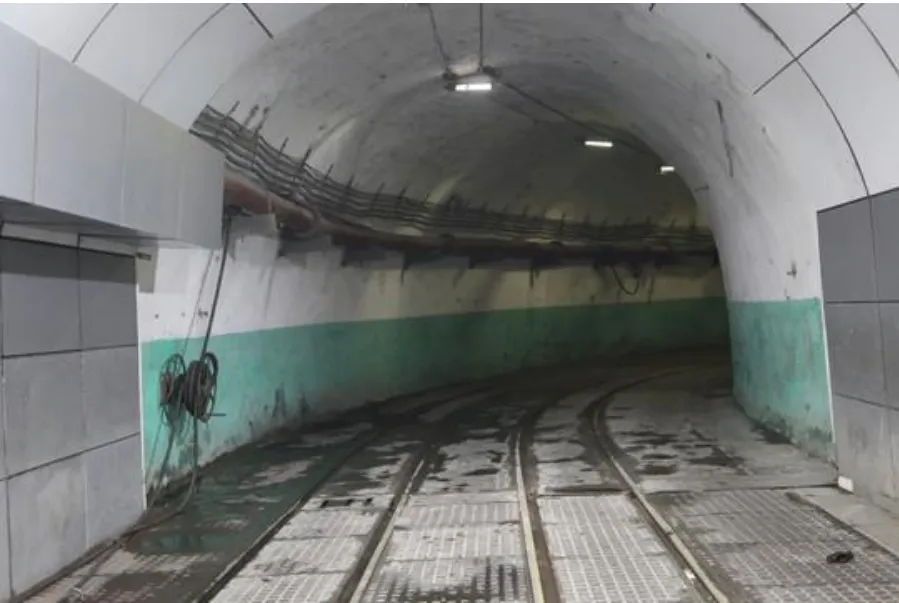
In the field of mining engineering, the coal seam transportation roadway serves as a crucial passage for coal transportation, personnel passage, ventilation, and pipeline laying. Its stratum selection is like laying the foundation stone for a magnificent building, playing a decisive role in the efficient operation, safe production, and long-term economic benefits of the entire mine. This selection is not a simple decision, but a complex system engineering project involving considerations of geological conditions, mining technology, maintenance costs, and safety guarantees. Reasonable stratum selection can ensure smooth coal transportation, reduce mining costs, improve production efficiency, and provide a solid guarantee for the long-term stable operation of the mine; conversely, wrong choices may lead to a series of problems, such as difficulties in roadway maintenance, low transportation efficiency, and increased safety hazards, seriously affecting the normal production and economic benefits of the mine. Therefore, in-depth discussion of the stratum selection of coal seam transportation roadways and its influencing factors is of great practical significance.
II. Coal Seam Roadway
(A) Advantages
When geological conditions permit, the layout of coal seam roadways has many significant advantages. From a construction perspective, due to the relatively low hardness of the coal seam, the difficulty of excavation is significantly reduced, which significantly improves the excavation speed. According to relevant data, under the same construction conditions, the excavation speed of coal seam roadways can be 30%-50% faster than that of rock roadways, which is of great significance for shortening the mine construction period and quickly realizing coal resource exploitation. At the same time, the construction process of coal seam roadways is relatively simple, and the required excavation equipment and technical requirements are relatively low, which not only reduces construction costs but also reduces equipment investment and maintenance costs. In addition, during the excavation of coal seam roadways, it can also play the role of exploration roadways. By directly exposing the coal seam, it is possible to more accurately understand the occurrence of the coal seam, such as coal seam thickness, dip angle, and coal quality, providing detailed geological data for subsequent mining work. Moreover, in some cases, the characteristics of the coal seam itself, such as natural fissures in the coal seam, can be used to optimize the roadway support design, further reducing support costs.
(B) Limitations
However, when maintenance conditions are difficult and gas geology is complex, the limitations of coal seam roadways become apparent. Due to the poor stability of the coal seam and the influence of mining activities and mine pressure, the roadway is prone to deformation and damage, which greatly increases the difficulty of roadway maintenance and increases maintenance costs. According to statistics, under difficult maintenance conditions, the maintenance cost of coal seam roadways can be 2-3 times that of rock roadways. In addition, a large number of protective coal pillars need to be left in coal seam roadways to ensure the stability and safety of the roadways. These coal pillars are difficult to recover, resulting in significant losses of coal resources. More seriously, when the coal seam has a natural fire hazard, once a fire occurs, the roadway must be sealed, which will lead to the shutdown of the entire mine. Moreover, the coal pillars are affected by mining activities, and the sealing effect is often poor, making the fire difficult to handle, causing huge economic losses and safety risks to the mine. At the same time, when the coal seam has many undulations and folds, it is difficult to maintain the stability of the excavation direction and slope of the roadway, which will affect transportation efficiency and increase transportation costs. In areas with complex gas geology, coal seam roadways are also prone to gas accumulation and outbursts, seriously threatening the safe production of the mine.
III. Rock Roadway
(A) Challenges
Although rock roadways have many advantages, it is undeniable that they also face a series of serious challenges during construction and maintenance. From a construction perspective, the hardness of rock is far higher than that of coal seams, which makes the difficulty of excavation increase exponentially. In some areas with complex geological conditions, the hardness coefficient of rock can even reach 8-10, which greatly hinders excavation work. Traditional blasting excavation methods not only have complex construction procedures and require a large amount of manpower, material resources, and financial resources, but also have a greater impact on the surrounding rock formations, easily causing rock breakage and collapse, increasing construction safety risks. According to statistics, under the same construction conditions, the excavation speed of rock roadways is only 50%-70% of that of coal seam roadways, which greatly extends the construction period of the mine and increases construction costs. At the same time, the excavation of rock roadways requires professional excavation equipment, such as fully hydraulic rock drills and TBM hard rock excavators. These equipment are expensive, and the purchase and maintenance costs are high, placing high demands on the financial strength of construction enterprises. Moreover, during rock excavation, a series of problems such as ventilation, drainage, and dust prevention need to be solved, further increasing the complexity and difficulty of construction.
In terms of maintenance, although rock roadways are relatively easier to maintain than coal seam roadways, under some special geological conditions, such as soft rock formations and high-stress areas, rock roadways can also experience serious deformation and damage. Soft rock formations have loose, scattered, soft, and weak characteristics, with high ground pressure, making roadway maintenance extremely difficult. Conventional construction methods and support forms are often ineffective. In high-stress areas, the pressure on the rock exceeds its own bearing capacity, easily causing cracks and deformation, leading to a reduction in the roadway cross-section and affecting normal transportation and ventilation. According to relevant data, in soft rock formations and high-stress areas, the maintenance cost of rock roadways may be 30%-50% higher than under normal conditions, and the maintenance cycle is shortened, requiring frequent maintenance and repair work. In addition, the maintenance of rock roadways also needs to consider the influence of geological structures, such as faults and folds. These geological structures will change the mechanical properties and stress distribution of the rock, increasing the difficulty of roadway maintenance.
(B) Countermeasures
In response to the challenges faced by rock roadways, the mining engineering field continues to explore and innovate, adopting a series of effective countermeasures. In terms of construction technology, with the continuous advancement of technology, various advanced excavation technologies have emerged, providing strong support for the efficient construction of rock roadways. The application of integrated excavation technology has achieved integrated operation of excavation, loading, and transportation, greatly improving construction efficiency and reducing manpower input. Taking a certain coal mine as an example, after adopting integrated excavation technology, the monthly advance rate of rock roadways increased from the original 80-100 meters to 150-200 meters, and the construction efficiency increased by almost one time. The emergence of TBM hard rock excavators is a major breakthrough in rock excavation technology. It uses the method of rolling cutters on a rotating cutterhead to squeeze and shear rocks, with advantages such as fast excavation speed, high construction quality, and good safety performance. When Shanxi Huayang Group New Energy Co., Ltd. used a TBM excavator to construct the return air roadway of the mining area, the maximum monthly advance rate reached 641 meters, and the average daily advance rate was 17 meters, creating good economic and social benefits. At the same time, in order to improve blasting efficiency and safety, blasting technology is also constantly improving, such as the use of medium-deep hole blasting smooth blasting technology. By reasonably designing the blast hole depth, spacing, and charge amount, the damage to the surrounding rock is reduced, and the quality of roadway formation is improved.
Regarding support methods, to ensure the stability of the rock roadway, it is crucial to select a reasonable support method based on different geological conditions and rock properties. Anchor-spray support is a commonly used support method. It combines rock bolts and sprayed concrete to tightly integrate the surrounding rock with the support structure, forming a system that shares the load and effectively improving the stability of the surrounding rock. In areas with better surrounding rock conditions, single anchor-spray support can meet the requirements; however, in complex geological conditions such as soft rock layers and high-stress areas, combined support methods are needed, such as anchor grouting + anchor net cable spray combined support technology. After adopting the anchor grouting + anchor net cable spray combined support technology in the Xinzhi Coal Mine 310 track roadway, the problems of surrounding rock fragmentation and severe instability were effectively solved, the roadway deformation was significantly controlled, and maintenance costs were significantly reduced. In addition, to grasp the deformation of the roadway surrounding rock in a timely manner, it is necessary to strengthen the monitoring of the roadway. By installing monitoring equipment such as displacement meters and stress meters, the displacement and stress changes of the surrounding rock are monitored in real time, providing a scientific basis for the adjustment and optimization of support parameters.
IV. Influencing Factors
(A) Geological Conditions
Geological conditions play the most crucial role in the selection of strata for coal seam transportation roadways and are the core consideration in the entire decision-making process. The stability of the coal seam is the first aspect that needs to be focused on; a stable coal seam can provide a solid and reliable foundation for the layout of the roadway. In areas with good coal seam conditions, where the coal seam thickness is uniform, the dip angle changes are small, and the geological structure is relatively simple, it is an ideal choice to place the roadway in the coal seam. This not only makes full use of the natural conditions of the coal seam, reducing construction difficulty and cost, but also better adapts to the mining sequence and process requirements of the coal seam. Conversely, if the coal seam is unstable, the thickness changes frequently, and the dip angle fluctuates greatly, it will bring great challenges to the layout and maintenance of the roadway. For example, in areas where the coal seam thickness changes drastically, roadway excavation may face frequent adjustments and changes, increasing construction difficulty and cost. Moreover, unstable coal seams are prone to collapse and deformation during mining, posing a serious threat to roadway safety.
The complexity of the geological structure is also an important factor affecting the choice of roadway strata. The existence of geological structures such as faults and folds will change the original occurrence state of the coal seam, increasing the difficulty and risk of roadway layout. Faults can cause the coal seam to move and displace, leading to the destruction of the continuity of the coal seam. Near faults, the rocks are fragmented, and the ground pressure increases, significantly increasing the difficulty of roadway support and maintenance. If the roadway crosses a fault, it may cause roadway collapse, water inrush, and other accidents, seriously affecting the safe production of the mine. According to statistics, in areas with faults, roadway maintenance costs may be 50%-100% higher than in normal areas. Fold structures will cause the coal seam to bend and undulate, affecting the excavation direction and slope of the roadway and reducing transportation efficiency. In the fold axis, the rock stress is concentrated, and it is easy to crack and deform, which has an adverse effect on the stability of the roadway. Therefore, in areas with complex geological structures, it is usually preferable to place the roadway in the rock to avoid the influence of geological structures. Through detailed investigation and analysis of the geological structure, selecting to excavate the roadway in relatively stable rock strata can effectively reduce construction risks and improve the stability and safety of the roadway.
(B) Maintenance and Gas
Maintenance conditions and gas geology have a crucial impact on the selection of roadway strata and are key factors that cannot be ignored. When maintenance conditions are difficult, the disadvantages of coal seam roadways become fully apparent. Due to the relatively weak mechanical properties of the coal seam, under the action of mining pressure, the roadway is prone to deformation and damage. Roadway deformation will cause the cross-section to shrink, affecting ventilation, transportation, and pedestrian safety. To maintain the normal use of the roadway, frequent maintenance and repair work is required, which not only consumes a large amount of manpower, material resources, and financial resources, but also affects the normal production of the mine. In some soft coal seams, the deformation rate of the roadway is faster, the maintenance cycle is short, and the maintenance cost is high, putting great pressure on the mine's economic benefits. In contrast, rock roadways have obvious advantages in maintenance. Rocks have higher strength and stability and can withstand greater mining pressure, with relatively less roadway deformation and damage. Under the same geological conditions, the maintenance cost of rock roadways is usually 30%-50% lower than that of coal seam roadways, and the maintenance cycle is longer, providing strong support for the long-term stable production of the mine.
Gas geological conditions are also an important factor that must be considered when selecting roadway strata. In areas with high gas content and high gas pressure, coal seam roadways have serious safety hazards. Gas accumulation may cause explosions and asphyxiation accidents, posing a huge threat to the lives of miners. Coal and gas outbursts are extremely dangerous phenomena; once they occur, they will cause serious casualties and property losses. Therefore, in areas with complex gas geology, to ensure the safe production of the mine, rock roadways should be prioritized. Rock roadways can effectively isolate gas, reduce the impact of gas on the roadway, and reduce the probability of gas accidents. Through a reasonable ventilation system and gas extraction measures, the gas concentration can be better controlled to ensure mine safety. In some high-gas mines, the use of rock roadways combined with gas extraction technology has successfully solved the problem of gas control and achieved safe and efficient mine production.
(C) Transportation Method
Different auxiliary transportation methods and equipment will significantly affect the relative position of the roadway and the coal seam floor contour lines, thus affecting the choice of roadway strata. When using rail transportation, to ensure smooth and safe transportation, the roadway needs to maintain a certain slope and straightness. When the coal seam floor fluctuates greatly, if the roadway is laid along the coal seam, the slope and direction need to be frequently adjusted, which not only increases the construction difficulty and cost but also affects transportation efficiency. In this case, placing the roadway in a rock stratum with a relatively stable position relative to the coal seam floor contour line can better meet the requirements of rail transportation. By reasonably designing the slope and curvature of the roadway and ensuring the quality of track laying, the safety and reliability of transportation can be improved. When using belt conveyors for transportation, the slope requirements for the roadway are relatively low, and more attention is paid to the continuity and linearity of the roadway. At this time, the roadway can be laid in the coal seam or in a suitable rock stratum relative to the coal seam floor contour line according to the occurrence of the coal seam. When the coal seam occurrence is stable and the geological conditions are good, placing the roadway in the coal seam can reduce the amount of rock excavation and lower costs. At the same time, using the continuous transportation characteristics of belt conveyors can achieve efficient coal transportation.
In some modern mines, the use of new auxiliary transportation equipment such as trackless rubber-tired vehicles has put forward new requirements for the layout of main roadways. Trackless rubber-tired vehicles have advantages such as flexible transportation and high speed, but they have high requirements for the width, height, and ground flatness of the roadways. To adapt to the operation of trackless rubber-tired vehicles, the main roadways need to have sufficient space and good ground conditions. In this case, the selection of the main roadway level needs to comprehensively consider the conditions of the coal seam and rock formations, as well as the operational requirements of trackless rubber-tired vehicles. By optimizing the design and layout of the main roadways and reasonably selecting the level, the advantages of trackless rubber-tired vehicles can be fully utilized to improve the efficiency of auxiliary transportation. Therefore, when selecting the main roadway level, it is necessary to comprehensively consider various factors based on different auxiliary transportation methods and equipment, optimize the transportation layout, and achieve efficient operation of the mine transportation system.
V. In-depth Analysis of Actual Cases
(1) Case 1: Successful Application of Coal Seam Main Roadways
A certain modern mine, mining near-horizontal coal seams, with medium-hard coal quality and relatively hard roof. The strike length of the mining area is moderate, the geological conditions are relatively simple, the coal seam is stable, the dip angle is small, and the average thickness is 3-4 meters. In the initial stage of mine construction, after detailed geological exploration and technical and economic demonstration, it was decided to adopt the layout method of coal seam main roadways. Due to the moderate hardness of the coal seam, the comprehensive mining technology was used for construction, and the excavation speed was significantly improved, with a monthly advance of 200-250 meters. During the construction process, by directly exposing the coal seam, the thickness changes, dip angle, and coal quality of the coal seam were accurately grasped, providing reliable geological data for subsequent mining work.
In terms of roadway support, the combined support method of anchor rods + anchor cables + shotcrete was adopted, effectively ensuring the stability of the roadway. At the same time, in order to reduce the impact of roadway deformation on transportation, backfilling treatment was carried out on the roadway, further enhancing the support effect of the roadway. In the coal transportation process, due to the relatively gentle slope of the coal seam main roadway and the layout along the strike of the coal seam, belt conveyors were used for transportation, realizing efficient and continuous coal transportation. Compared with using rock main roadways, it not only reduces the amount of rock excavation work and reduces construction costs, but also shortens the construction period of the mine and realizes the mining of coal resources ahead of schedule. After the mine was put into production, through reasonable mining layout and efficient production organization, the coal output of the mine has increased year by year, and the economic benefits have been significantly improved.
(2) Case 2: The Wise Choice of Rock Main Roadways
Another mine has unstable coal seam occurrence, complex geological structures, and multiple faults and folds. The coal seam has a high methane content and has the danger of coal and gas outbursts. In the mine development design stage, fully considering these factors, it was decided to adopt the layout method of rock main roadways. Due to the high hardness of the rock, a TBM hard rock tunneling machine was used for construction. Although the initial equipment investment was large, the excavation speed was fast, and the construction quality was high.
In terms of roadway support, for soft rock layers and high-stress areas, the combined support technology of grouting + anchor net cable spraying was adopted. By injecting cement slurry into the surrounding rock, the strength and integrity of the surrounding rock were improved, and combined with the combined action of anchor rods, anchor cables, and sprayed concrete, the deformation of the roadway was effectively controlled. At the same time, in order to prevent gas leakage, strict sealing treatment was carried out on the roadway, and a complete gas monitoring and extraction system was established. In terms of coal transportation, a combined transportation method of belt conveyors and scraper conveyors was used to ensure the safety and smoothness of coal transportation. Because rock main roadways can effectively avoid the influence of geological structures and gas, they ensure the safe production of the mine and avoid gas accidents and roadway deformation problems that may be caused by coal seam main roadways. Although the construction cost of rock main roadways is higher, in the long run, its safety and stability lay a solid foundation for the sustainable development of the mine.
VI. Summary
The selection of the level of coal seam transportation main roadways is a complex decision-making process involving multiple intertwined and mutually influencing factors, and its importance is self-evident. When geological conditions permit, coal seam main roadways, with their advantages of convenient construction, fast excavation speed, and ability to explore the occurrence of coal seams, have become the first choice for some mines. However, under difficult maintenance conditions and complex gas geology, their high roadway maintenance costs, the need to leave a large number of coal pillars, and the susceptibility to gas threats cannot be ignored. Although rock main roadways have high construction difficulty and cost, they have significant advantages in adapting to changes in geological structures and ensuring safe production.
Geological conditions are key factors in the selection of main roadway levels. The stability of the coal seam and the complexity of the geological structure directly affect the layout and maintenance of the main roadways. Maintenance conditions and gas geology are equally important. Difficult maintenance conditions and complex gas geology will increase the maintenance cost and safety risks of main roadways. In this case, rock main roadways are more suitable. Differences in auxiliary transportation methods and equipment will also affect the relative position of the main roadway and the coal seam floor elevation, thus affecting the selection of the main roadway level.