-
About Us
-
-
-
Contact Us

Domestic Mining Enterprises Amid the Trade War: An Analysis of Mineral Commodity Impacts by October 2025
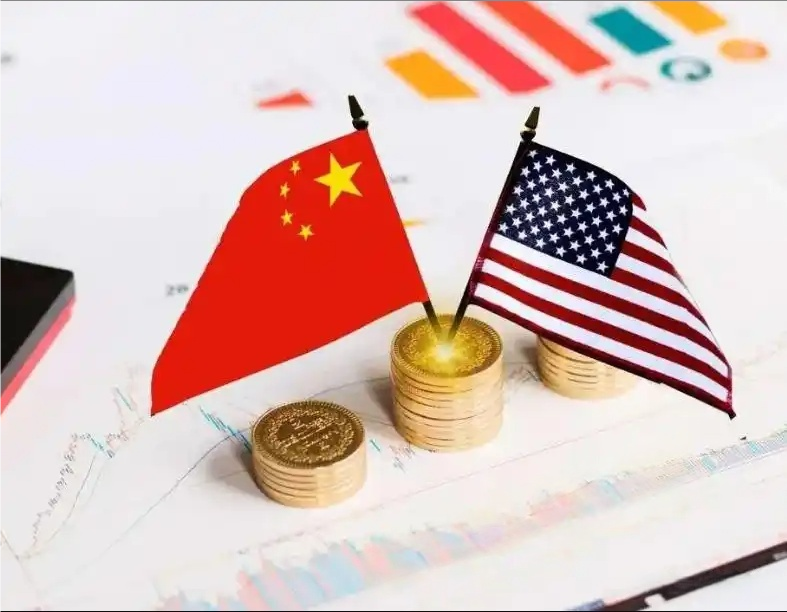
01 Negative factors for ore types: Declining demand for traditional industrial ores coincides with rising cost pressures.
Iron ore: High import dependence exacerbates supply chain risks
Although China boasts relatively substantial reserves of iron ore resources, the majority are low-grade ores, with only a small proportion of high-quality deposits. The average iron content stands at just 34.50%, falling below the global average and resulting in relatively high extraction costs. For decades, China has relied heavily on foreign sources for its iron ore needs, with external dependence exceeding 60%—primarily through imports from countries like Australia and Brazil. Since the escalation of the trade war in 2025, the volatile international political and economic landscape has sent shipping costs soaring. On one hand, trade tensions have driven up maritime insurance premiums; on the other hand, restrictions imposed by certain nations on cargo vessels have further extended shipping timelines. Together, these factors have significantly increased the cost of importing iron ore.
Meanwhile, domestic steel exports have been hampered, forcing many steel companies to cut production in an effort to reduce inventory buildup. This decline in steel output has directly led to a drop in demand for iron ore. Domestically, mining enterprises are now facing dual pressures: mounting inventory and falling prices. Data shows that by October 2025, the landed cost of imported iron ore had fallen by 15% compared to the beginning of the year, while the Platts iron ore price index (CFR) plummeted to its lowest level yet. At the same time, domestic iron concentrate prices have also begun to retreat, sharply squeezing profit margins for many mining firms. Meanwhile, some small- and medium-sized mining companies, already constrained by limited access to financing, are now encountering even greater challenges in securing funds amid the sluggish market conditions. As a result, their cash flows have tightened significantly, pushing several high-cost mines to either scale back production or shut down operations altogether.
Copper Ore: Weak End-Consumer Demand Triggers Price Volatility
Copper, as an important non-ferrous metal, is widely used in the electrical, electronics, and construction industries. China is the world's largest consumer of copper, with annual imports of copper concentrate accounting for more than 70% of domestic demand. The ongoing trade war has restricted China's exports of machinery and electronic products to the U.S., and by October 2025, LME copper prices had fallen by 8% compared to September, reflecting a declining market outlook for copper demand. As a result, domestic copper companies are seeing reduced orders, leading to lower utilization rates of smelting capacity at many enterprises—and in some cases, forcing entire production lines to remain idle.
The U.S. has imposed a 25% tariff on copper products, significantly increasing export costs for China's copper-processing enterprises, weakening their product price competitiveness and leading to a decline in export volumes. This impact is now rippling downstream to the upstream demand for copper ore, as companies face challenges such as inventory write-downs and strained cash flows. Although the supply side of copper mining has been disrupted by factors like the Chilean strike—resulting in a slight drop in global copper production—market demand for copper remains weak in the short term. As a result, copper-mining companies are under pressure to maintain profitability in the near term. To cut costs, some firms have been forced to scale back exploration and mining activities, which could ultimately hinder their long-term growth prospects.
Bauxite: Downstream processed product exports stalled, weighing on demand for raw ore
China faces an insufficient endowment of bauxite resources, with import dependence reaching 60%, primarily from Australia and Indonesia. During the trade war, the U.S. imposed a 10% tariff on aluminum products, directly impacting China's exports of aluminum processed goods. From January to October 2025, aluminum profile exports to the U.S. declined by 20% year-on-year, leading to reduced orders for domestic aluminum processing enterprises and a contraction in production scale—ultimately forcing down domestic demand for bauxite.
Meanwhile, domestic environmental policies are becoming stricter, continuously raising environmental requirements for bauxite mining enterprises. As a result, companies are being forced to invest more capital in building and operating eco-friendly facilities, thereby increasing their production costs. Additionally, rising electricity prices have further squeezed corporate profit margins. Under the dual pressure of declining product prices and escalating costs, the capacity utilization rate at some mines has dropped below 70%, while smaller mines even face the risk of closure altogether. Bauxite mining enterprises now stand at a critical juncture, confronting severe challenges that demand innovative technological advancements and industrial upgrades as key strategies to reduce costs and enhance competitiveness.
02 Positive Factors for Mineral Types: Strategic Resource Minerals and New-Energy-Related Minerals Seize Opportunities
Rare Earths: Global Supply Chain Holds Key Position, Highlighting Countermeasure Advantages
Rare earth elements are often referred to as "the vitamins of industry," playing an indispensable role in modern industrial applications. China is a major global producer of rare earth resources, holding 44% of the world's reserves—and is the only country capable of supplying all 17 types of rare earth metals, making it a central player in the global rare earth supply chain. As one of China's key trading partners, the United States is highly dependent on China for its rare earth imports, with reliance reaching as high as 100%.
During the 2025 trade war, China strengthened its export control measures on rare earths, driven by the strategic importance of these resources. In particular, stringent quota management was implemented for heavy rare earth elements—a move that delivered a powerful blow, directly impacting U.S. industries such as defense, new energy vehicles, and information technology. As heavy rare earths play a critical role in these high-tech sectors, U.S. companies now face severe shortages of raw materials, severely disrupting their production and operations.
In terms of market response, rare earth oxide prices rose by 12% month-on-month in October 2025, reflecting a significant shift in the balance between supply and demand. Leading companies in China's rare earth industry, such as Northern Rare Earths and Xiamen Tungsten Industry, leveraged their advantageous positions—boasting abundant resource reserves and robust production capabilities at domestic rare earth mines—to see order volumes grow against the backdrop of the trade war. As a result, capacity utilization rates at these domestic rare earth mining enterprises surged to over 90%, further boosting industry concentration. Meanwhile, amid the challenges posed by the trade conflict, companies have accelerated their transition from "raw material exports" to "high-end materials," ramping up investments in research and development as well as production within the deep-processing sector of rare earths. This strategic shift has not only enhanced product added value but also strengthened their competitive edge in the global rare earth market.
Cobalt Lithium: Resilient Demand for New Energy Supports Long-Term Positive Outlook
Cobalt and lithium, as critical raw materials for the new energy industry, are witnessing robust growth in demand against the backdrop of the global energy transition. Although market panic during the early stages of the trade war triggered a pullback in cobalt and lithium stock prices, this did not alter their long-term development trend. With the rapid expansion of the global electric vehicle and energy storage battery industries, the demand for cobalt and lithium continues to surge. From January to October 2025, China's production of new-energy vehicles increased by 35% year-on-year. Behind this impressive growth lies a significant rise in demand for battery raw materials such as lithium carbonate, driving a 25% increase in lithium carbonate consumption.
China's cobalt and lithium mining enterprises enjoy certain advantages in the global industrial chain layout. By securing stakes in cobalt mines and lithium salt lakes located in resource-rich countries such as the Democratic Republic of Congo and Argentina, these companies have gradually unlocked their production capacity. This global strategy enables them to effectively hedge against the impact of trade barriers, ensuring stable supply capabilities even amid the complex dynamics of trade wars. As of October 2025, cobalt prices have risen by 8% compared to the beginning of the year, while lithium salt prices have remained volatile at high levels. Recognizing the evolving market trends, these companies are swiftly expanding into the deep-processing sector for battery-grade products. Through technological innovation and process optimization, they are enhancing both product quality and added value, further strengthening their profitability and competitive edge in the market.
Gold: Safe-haven Demand and Monetary Attributes Drive Prices Higher
As a special precious metal, gold possesses the dual attributes of a safe-haven asset and a currency. Against the backdrop of the trade war, global economic uncertainty has significantly intensified, prompting investors to grow increasingly concerned about the future economic outlook—and driving a sharp surge in demand for gold as a safe-haven asset. In October 2025, the COMEX gold price soared above $4,200 per ounce, reaching a historic high. This remarkable price movement vividly underscores the market's robust appetite for gold.
Domestic gold mining companies have become direct beneficiaries of these market changes. Companies such as Shandong Gold and Zijin Mining have capitalized on rising gold prices, driving their gross profit margins for gold products above 40%. Such robust profits have enabled these enterprises to allocate more capital toward expanding their mining operations, accelerating the construction and development of new mines, and boosting overall gold production. Meanwhile, as the internationalization of the RMB continues to advance steadily, gold reserves are playing an increasingly critical role in stabilizing the RMB exchange rate and bolstering global confidence in China’s currency. In response, policymakers have intensified their support for consolidating and optimizing gold resources across the industry. By leveraging resource integration, gold mining firms are now able to unlock significant economies of scale, leading to higher industry concentration. This, in turn, enhances the companies’ ability to withstand market risks, laying a solid foundation for their long-term, sustainable growth and development.
03 Mining Enterprise Response Strategies and Industry Trends
Short-term strategy: Market diversification and cost control
Facing the complex market environment brought about by the trade war, mining enterprises have swiftly adjusted their business strategies to tackle both the challenges and opportunities presented by different types of ores. For commodities like iron ore, copper ore, and bauxite—where market conditions are unfavorable—companies have actively explored markets along the Belt and Road Initiative, seeking new trading partners and identifying emerging growth areas. Meanwhile, China Coal Mining & Construction Group has leveraged its unique strengths to accelerate its market expansion within the Belt and Road region, successfully winning the bid for Thailand’s Taikal Potash Mine EPC+O project. This achievement offers fresh insights into how domestic mining firms can thrive in the global marketplace. Additionally, some iron ore companies have forged cooperative relationships with suppliers in regions such as Africa and Central Asia, diversifying their supply channels and reducing reliance on traditional sources like Australia and Brazil. Meanwhile, copper producers are boosting the recycling rate of domestically sourced scrap copper, thereby lowering their dependence on imported copper concentrates and easing cost pressures. At the same time, companies are strengthening internal management, optimizing production processes, cutting costs, and enhancing overall efficiency.
For favorable commodities such as rare earths, cobalt-lithium, and gold, companies are increasing their investments in technology R&D to enhance product added value. Northern Rare Earths has launched the construction of a 50,000-ton high-performance neodymium-iron-boron rapid-solidification alloy project, further boosting its magnetic material production capacity to meet the growing demand for rare-earth permanent magnet materials in high-end sectors like new-energy vehicles and industrial robots. Meanwhile, cobalt-lithium enterprises are actively expanding into the battery recycling industry chain, recovering valuable metals like cobalt and lithium from end-of-life batteries. This not only enables resource recycling, reduces production costs, but also diminishes reliance on primary mineral resources. For instance, Huahong Technology has ramped up its investments in the comprehensive utilization of rare-earth resources and the magnetic materials sector, significantly scaling up its production capacity. Currently, the company’s annual output of recycled rare-earth oxides has reached 12,000 tons, placing it among the industry leaders.
Long-term Trends: Strategic Resource Integration and Green Transformation
In the long term, the trade war will accelerate the strategic resource integration and green transformation process among domestic mining enterprises. At the policy level, the government is stepping up its support for mergers and acquisitions within the mining sector, boosting industry concentration and enhancing companies' competitiveness in the global market. Take the rare-earth industry as an example—through resource consolidation, it has given rise to a structure dominated by "six major groups in the north and south," enabling optimized resource allocation and more efficient utilization.
Green mine development has become an inevitable trend in industry growth. The Natural Resources Department of the Ningxia Hui Autonomous Region is driving the green transformation of traditional mines by establishing a comprehensive "five-in-one" working system, clearly defining a three-tier responsibility framework and integrating it into local government performance evaluations. Additionally, the department has introduced five categories of local standards for green mine construction, implemented tailored assessment strategies ("one mine, one plan") and adopted dynamic management practices that allow mines to both enter and exit the program as needed—thus fostering deeper progress in green mining initiatives. Meanwhile, the Zaoquan Coal Mine has set a successful example by adopting an "integrated approach of mining and ecological restoration," leveraging intelligent mining technologies to boost resource recovery rates. It has also established smart water management and energy systems to achieve significant energy savings and emission reductions, serving as a model for sustainable mine development.
As the global energy transition accelerates, demand for new-energy-related minerals will continue to grow. Mining companies will ramp up their capacity investments in key new-energy minerals such as lithium, cobalt, and nickel, while actively driving traditional mining enterprises toward higher-value-added sectors. Some established mining firms are already transforming through technological upgrades, adopting intelligent mining technologies that enhance productivity, boost resource recovery rates, and cut down production costs. The implementation of these smart mining solutions not only boosts efficiency but also reduces labor requirements, minimizes safety risks, and optimizes resource utilization. In China, the mining industry has achieved remarkable progress in smart infrastructure development, marked by innovations like "unmanned operations," "autonomous haul trucks," "one-click start/stop systems," and "automated inspection processes." These cutting-edge technologies are taking root, thriving vigorously, and effectively bolstering safe production practices, elevating safety management standards, slashing labor expenses, and enhancing the overall image of mining operations.
The impact of the trade war on domestic mining enterprises is both complex and far-reaching, bringing not only challenges but also opportunities. While traditional industrial minerals face a dual dilemma in the short term—shrinking demand and rising cost pressures—strategic resource minerals and those tied to new energy sectors have demonstrated remarkable resilience, thanks to their advantages in global supply chains and robust market demand. Mining companies must adopt a long-term perspective, proactively addressing the challenges posed by the trade war through measures such as technological upgrades, market diversification, and integrated resource management. By doing so, they can seize emerging opportunities, strengthen their competitive edge amid the ongoing reshaping of the global mining landscape, and ultimately achieve sustainable growth.